In the world of vertical transportation, one question often arises: "Why choose a gearless lift machine over a geared one?" Industry expert Dr. Emily Carter addresses this topic, stating, "Gearless systems are more efficient and reliable in the long run." Gearless lifts have gained popularity due to their numerous advantages over traditional geared options.
Gearless machines operate with fewer moving parts. This design reduces wear and tear and enhances longevity. Consequently, maintenance costs plummet. Building owners appreciate these economically sound benefits. Gearless systems also offer smoother rides. Passengers enjoy a quieter, more comfortable experience. Noise and vibration are significant issues in geared systems.
The upfront costs of gearless lifts may raise eyebrows. However, their energy efficiency often results in a quicker return on investment. As urban areas become denser, the demand for reliable and compact lift systems intensifies. Reflecting on these choices forces stakeholders to weigh short-term expenses against long-term savings. Ultimately, the decision hinges on balancing immediate costs with future benefits.
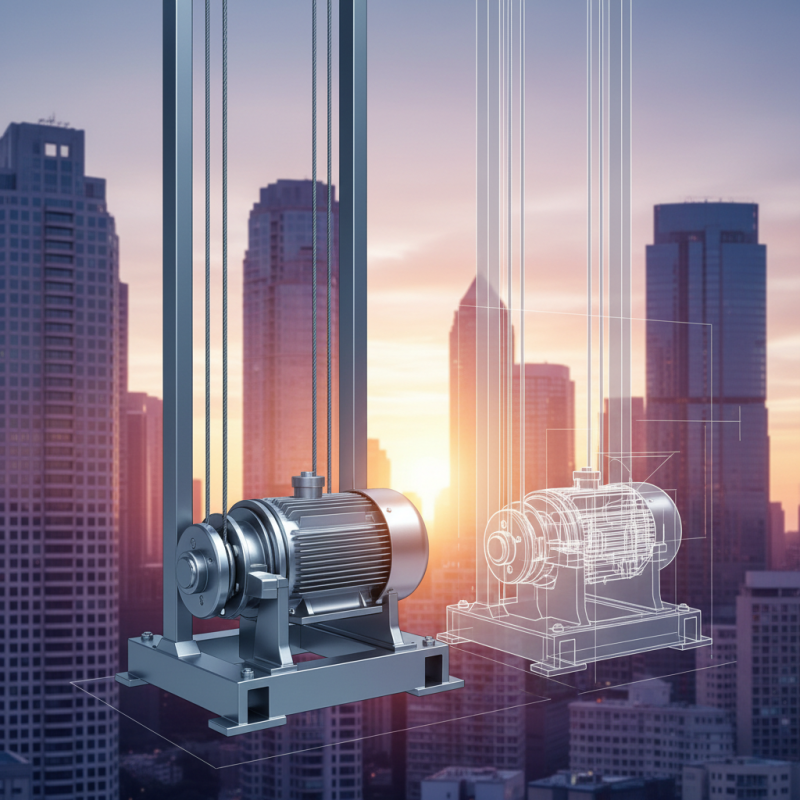
Gearless lift machines are gaining popularity in modern building design. Their advantages compared to geared options are notable and impactful. One key benefit is energy efficiency. Gearless systems eliminate the need for a traditional gearbox, which reduces energy consumption significantly. This leads to a decreased carbon footprint and lower utility bills, which is appealing for eco-conscious developers.
Another advantage is space-saving design. Gearless systems are often more compact. They require less room for installation, allowing for more usable space in buildings. This is especially beneficial in urban areas where space is limited. Additionally, reduced mechanical wear translates to lower maintenance needs. This means fewer downtime occurrences, making them attractive for high-traffic environments.
However, gearless systems may have higher initial costs. This can be a barrier for some projects. There is also a learning curve for installation and maintenance. Not all service teams are familiar with this technology. As the industry evolves, education around gearless lifts is crucial for adoption. Each option has its merits, and careful consideration is necessary.
| Criteria | Gearless Lift Machines | Geared Lift Machines |
|---|---|---|
| Energy Efficiency | Higher efficiency with lower power consumption | Moderate efficiency; higher energy consumption |
| Maintenance | Reduced maintenance due to fewer moving parts | More frequent maintenance required |
| Noise Levels | Quieter operation | Generally noisier due to gear mechanisms |
| Space Requirements | Compact design; requires less machine room space | Larger machine room needed due to gear assembly |
| Ride Comfort | Smoother ride with less vibration | May experience more vibration |
| Load Capacity | Higher load capacity options available | Standard load capacities |
| Initial Cost | Higher initial investment | Lower initial cost |
Gearless lift systems are becoming increasingly popular in modern buildings due to their operational efficiency. These systems eliminate the need for traditional gearboxes, which can add both weight and complexity. Instead, they use a direct drive mechanism that allows for smoother and quieter operation. According to a recent industry report, gearless lifts can enhance energy efficiency by up to 30% compared to geared options. This is crucial in minimizing the operational costs for high-rise buildings.
The design of gearless lifts also contributes to their longevity. They require less maintenance due to fewer moving parts. A study indicates that gearless machines can have a lifespan that is 20% longer than their geared counterparts. Reduced wear and tear translates to fewer service interruptions, which is vital for high-traffic buildings. However, there are initial costs that might deter some developers. The initial investment can be significant, leading to hesitations in adopting this technology.
In terms of performance, gearless systems offer rapid acceleration and reduced downtime. They achieve faster travel speeds without compromising on safety. Research shows they can reduce wait times by 15% in busy environments. This not only enhances user experience but also maximizes the efficiency of building operations. Still, the reliance on advanced technology means that if a failure occurs, it can be more complex and costly to repair. Developers and operators need to weigh the upfront costs against long-term benefits.
When considering lift systems, maintenance is a crucial factor, especially with gearless versus geared options. Gearless lifts generally require less frequent maintenance due to their simpler design. A report from the Elevator World states that gearless systems can reduce maintenance costs by up to 30%. This reduced cost is largely due to fewer moving parts that can wear out or need lubrication.
However, specialized training is needed for technicians working on gearless lifts. Maintenance teams require familiarity with these systems, which may not be widespread. In contrast, geared lifts often have readily available parts and a larger pool of trained personnel. A recent study indicated that around 45% of maintenance professionals prefer working with geared systems due to their familiarity and ease of access to replacement components.
While gearless lifts are efficient, their reliance on advanced technology can pose challenges. For instance, in case of a malfunction, diagnostic procedures can be complex. Moreover, replacement components can sometimes take longer to source. This can lead to downtime, which is costly. Understanding these dynamics will help in making informed decisions regarding lift system maintenance and operational efficiency.
Gearless lift machines stand out for their low energy consumption and reduced environmental impact. Unlike geared options, they use a direct drive mechanism. This enhances efficiency and minimizes the energy required for operation. Gearless lifts can save significant power, especially in high-rise buildings. Their design allows for smoother and quieter rides. This is particularly appealing in urban settings where noise pollution is a concern.
Tip: Regular maintenance improves a gearless lift's energy efficiency. Dust and debris can hinder performance, increasing energy use.
Another benefit is their lifespan. Gearless models often outlast geared lifts. Less wear and tear means fewer replacements and fewer materials consumed over time. However, the initial investment may be higher. Yet, the long-term savings in energy and maintenance can outweigh this cost.
Tip: Consider the operational environment when choosing lift systems. High-traffic areas might benefit more from gearless options due to their durability and efficiency.
In an era where sustainability is crucial, gearless lifts offer a compelling choice. They align building projects with eco-friendly goals while providing reliable service. Thinking ahead ensures smarter building solutions.
The chart above illustrates the average annual energy consumption of gearless lift machines compared to geared lift machines. Gearless lifts typically consume about 33% less energy, resulting in lower operational costs and a reduced environmental impact.
When evaluating gearless lift machines versus geared options, initial investment costs and long-term savings are crucial. Reports indicate that gearless elevators can have a higher upfront cost, often ranging from 10% to 30% more than geared systems. This might deter some investors initially. Yet, these costs need careful consideration for their long-term benefits.
Operating a gearless lift typically leads to lower energy expenses. Industry data show that gearless machines can be up to 40% more energy-efficient. Their advanced technology often translates to less wear and tear, meaning lower maintenance costs over time. Several studies indicate that these savings can recoup the initial investment within five to ten years.
However, not all projects require the efficiency of gearless systems. For buildings with lower traffic, geared elevators might suffice. In cases of budget constraints, this could be the wiser choice. A comprehensive analysis of the building's specific needs is essential for decision-making, ensuring both financial and operational factors are aligned effectively.
: Gearless lifts are energy-efficient and save space. They use less energy, reducing costs and carbon footprints.
Yes, gearless systems are usually more compact. This saves valuable space in buildings, especially in urban areas.
Actually, gearless systems require less maintenance. Reduced mechanical wear leads to fewer downtimes and lower service needs.
Gearless lifts often have higher upfront costs, ranging from 10% to 30% more than geared systems.
Typically, savings from gearless lifts can recover the initial investment within five to ten years.
No, not all buildings require gearless lifts. For low-traffic buildings, geared elevators might be sufficient.
The higher initial costs can deter some investors. Additionally, the installation requires specialized knowledge that not all teams have.
Education is crucial as the industry evolves. It helps service teams understand gearless technology and promotes wider adoption.
While gearless lifts often save money over time, not all projects ensure the same level of efficiency or savings.
A thorough assessment of the building's needs is vital. Both financial and operational factors must align before making a decision.
In the debate of "Why choose a gearless lift machine over a geared one," several compelling advantages come to light. Gearless lift systems offer enhanced operational efficiency due to their direct drive mechanism, resulting in smoother rides and faster response times. Additionally, these systems require less maintenance compared to their geared counterparts, as they have fewer moving parts that can wear out over time. This not only saves on maintenance costs but also minimizes downtime.
Furthermore, gearless lifts demonstrate superior energy efficiency, often translating to lower energy consumption and a reduced environmental footprint. While the initial investment for gearless models may be higher, the long-term savings in energy costs and maintenance make them a cost-effective choice over time. Ultimately, the benefits of gearless lift machines underscore their value in modern vertical transportation solutions.

Samar Lift