In the world of vertical transportation, understanding the nuances of different lift systems is crucial. One common discussion revolves around "What is the difference between hydraulic and traction lifts?" According to a report by the National Elevator Industry, around 15% of commercial buildings utilize hydraulic lifts, while traction lifts dominate, with a market share of nearly 80%.
Hydraulic lifts operate using fluid pressure, offering smooth rides but may require more maintenance due to fluid leaks. On the other hand, traction lifts rely on cable systems, providing quicker speeds and greater energy efficiency. A study from the Elevator World Journal indicates that traction lifts can save up to 35% in energy costs over their lifetime. This efficiency is significant, especially in high-rise buildings where the energy savings can be substantial.
Both systems have their strengths and weaknesses. Hydraulic lifts can be less expensive to install, yet they can be limited in height. Meanwhile, traction lifts excel in performance and longevity but might have higher initial costs. Navigating these differences is essential for making informed choices in building design and construction.
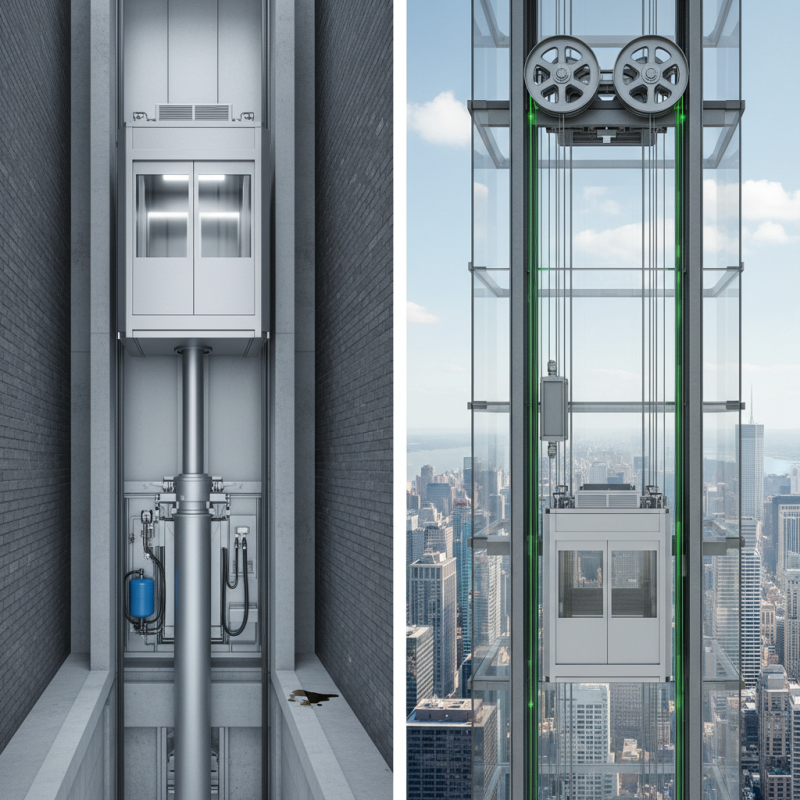
Hydraulic lifts operate using a fluid-driven mechanism. They are renowned for their ability to handle heavy loads. Reports from the Elevator World indicate that hydraulic lifts can raise loads of up to 2,000 pounds with ease. This makes them ideal for buildings with fewer floors. They provide smooth and reliable movement, which is crucial in busy settings.
One notable characteristic of hydraulic lifts is their installation requirements. These systems need a pit for the hydraulic cylinder, which can complicate installation. Additionally, the system requires regular maintenance to ensure efficiency. A study by the National Elevator Industry, Inc. highlights that hydraulic lifts generally require more maintenance compared to traction lifts. Frequent inspections are necessary to avoid issues like fluid leaks, which can affect performance.
Energy consumption is another aspect to consider. Hydraulic lifts can be less energy-efficient for long distances. Their motors run continuously, consuming power even when idle. Reports show that while hydraulic systems are effective in low-rise applications, they can lead to higher operational costs over time. Understanding these aspects is essential before choosing the right lift for specific needs.
| Feature | Hydraulic Lifts | Traction Lifts |
|---|---|---|
| Mechanism | Uses hydraulic fluid to move the lift | Utilizes a traction cable system |
| Speed | Generally slower | Typically faster |
| Maintenance | Requires more frequent maintenance due to hydraulic fluid | Generally lower maintenance |
| Cost | Usually lower installation cost | Higher initial investment needed |
| Space Requirements | Requires a machine room for hydraulic components | Can be more compact and space-efficient |
: Hydraulic lifts usually support 2,500 to 5,000 pounds. This makes them ideal for heavy loads.
Traction lifts generally support lighter loads, typically between 1,000 to 2,500 pounds. They may not fit heavier needs.
Their robust design allows hydraulic lifts to handle significant weight without losing performance. They work well in demanding settings.
Traction lifts move efficiently using pulleys. They often consume less energy, particularly in tall buildings.
Hydraulic lifts can consume more energy due to complex systems. Traction lifts usually result in lower ongoing energy costs.
Hydraulic lifts may need frequent maintenance due to complexity. Traction lifts tend to be simpler and easier to maintain.
Their energy usage can fluctuate, leading to unpredictable operating costs over time. This can be a concern for budgeting.
In residential buildings, traction lifts may be favored for their speed. They can meet lighter transportation needs effectively.
Choosing an efficient lift impacts operational costs. It's vital to understand how energy use aligns with your specific needs.
These drives feed energy back into the building's power system. This feature boosts energy efficiency and reduces overall consumption.
When considering the choice between hydraulic and traction lifts, it’s essential to understand their key differences. Hydraulic lifts operate using fluid pressure to raise and lower the elevator car, making them suitable for low-rise buildings due to their limited weight capacity and slower speeds. In contrast, traction lifts use a system of pulleys and ropes, allowing for faster speeds and greater weight capacities, making them ideal for taller structures.
Energy efficiency is another critical aspect to consider; traction lifts generally consume less power and offer more sustainable operation compared to hydraulic lifts. Maintenance and reliability play significant roles as well, with traction lifts often requiring less frequent servicing due to their simpler mechanical design. Ultimately, understanding what is the difference between hydraulic and traction lifts can guide the selection process based on specific building needs and usage requirements.

 Samar Lift