Why choose a gearless lift machine over a geared one? The answer begins with the building, not the brochure. Gearless traction machines connect the motor directly to the drive sheave. This design removes the gearbox, reducing mechanical losses, oil requirements, and several wear points. In a quiet hotel lobby, that difference can mean smoother acceleration and less audible vibration.
Energy deserves careful attention. The United Nations Environment Programme’s Global Status Report for Buildings and Construction 2024 states that buildings consume about 32% of global energy and produce approximately 34% of global carbon emissions. CIBSE Guide D also identifies lift systems as potentially using 2–10% of a building’s electricity, depending on traffic and equipment. These figures do not prove that every project needs gearless technology. They show why efficiency should be measured, not assumed.
Elevator consultant and author Dr. Gina Barney describes the practical reality clearly: “The lift is a system, not simply a machine.” His point matters when comparing China’s top 10 gearless lift machine suppliers. Motor efficiency, permanent-magnet design, braking control, installation quality, maintenance access, and after-sales support all influence the final result. A cheaper machine may become expensive if technicians struggle to source bearings or diagnose inverter faults.
Gearless is not automatically better. Low-rise buildings, light traffic, or strict budget limits may justify geared equipment. Yet high-rise offices, hospitals, and residential towers often benefit from compact layouts and regenerative-drive compatibility. This guide examines the leading Chinese suppliers through measurable performance, certification, service experience, and application fit. Some published claims remain difficult to compare. That is precisely where careful review is needed.
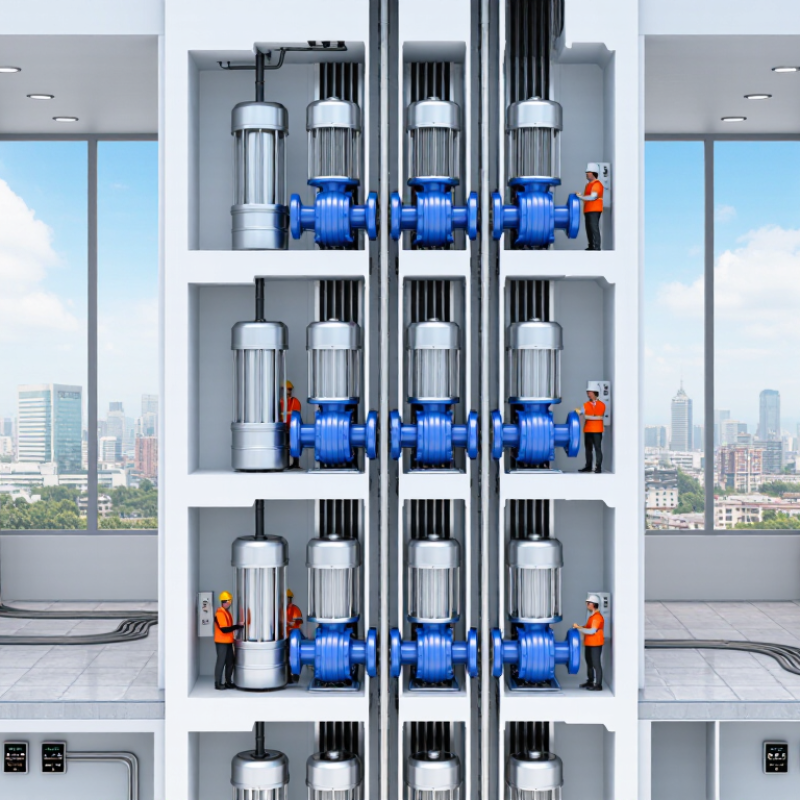
A gearless lift machine drives the traction sheave directly. It removes the gearbox between the motor and the ropes. Inside, a permanent-magnet synchronous motor rotates the sheave at low speed. The ropes move the lift car and counterweight through friction. A brake holds the car during stops, while an inverter controls speed smoothly.
The system is compact. It also produces less mechanical noise. According to the U.S. Department of Energy, elevators may use 2–10% of a commercial building’s electricity, depending on traffic and equipment. Gearless systems can reduce losses linked to gearbox friction. However, energy savings are not automatic. Car weight, travel height, standby controls, and passenger demand matter more than many sales pages suggest.
It needs accurate installation.
The International Organization for Standardization’s ISO 25745-2 evaluates lift energy performance through driving, standby, and idle conditions. This matters when comparing suppliers in China’s top ten market. A reliable supplier should provide motor efficiency curves, braking data, inverter compatibility, and tested load performance. Ask for measurements at partial loads, not only full-load figures.
The International Energy Agency reported that buildings consume about 30% of global final energy, making small efficiency gains valuable across large property portfolios.
Yet maintenance access is sometimes overlooked. A quieter machine is not enough if technicians struggle to inspect bearings, brakes, or encoder wiring.
Ranking China’s top gearless lift machine suppliers requires more than counting export volume or factory size. A serious assessment begins with engineering experience, production consistency, and verified field performance. We examine how long each supplier has developed permanent-magnet traction systems, not merely how long it has traded. Design teams should explain torque margins, thermal control, brake response, and controller compatibility. Clear drawings and traceable test records matter.
Energy efficiency is measured under realistic loads, including standby operation, repeated starts, and uneven passenger distribution. Noise matters too. A machine that sounds quiet in a showroom may behave differently inside a shaft. Independent testing, documented safety compliance, and stable insulation results strengthen a supplier’s position. We also review bearing life, rope traction, vibration readings, and maintenance access. Small details can reveal large risks.
Commercial ranking includes delivery reliability, spare-part availability, technical support, and warranty clarity. Factory audits should confirm machining accuracy, assembly controls, and final-load testing. Customer references are useful when they describe years of service, not only installation-day photos. Price receives attention, but it should not dominate the score. A low quotation can hide weak documentation or costly downtime. No ranking is perfect. Local conditions, project height, climate, and service skills can change the result. Our evaluation combines measurable data with engineering judgment, while leaving room to challenge early conclusions.
China’s top ten gearless lift machine suppliers are usually established manufacturers from Jiangsu, Zhejiang, Guangdong, Shandong, and Shanghai. They serve residential towers, hospitals, offices, and high-speed passenger projects. Their product ranges often include permanent-magnet synchronous machines, compact traction units, and low-noise solutions.
A dependable supplier should provide tested load data, brake response records, insulation results, and full installation drawings. Experienced engineers also explain shaft alignment, rope traction, thermal limits, and emergency release procedures. Factory visits can reveal important details. Look for clean assembly areas, calibrated testing equipment, traceable components, and technicians who answer practical questions without exaggeration.
My early assumption was that the largest factory would always be the safest choice. That proved too simple. A smaller supplier may offer closer engineering support and faster modifications. However, limited export experience can create documentation problems. Check certifications, test reports, warranty terms, spare-part availability, and after-sales response times. Ask whether the quoted machine matches your lift speed, rated load, rope arrangement, and operating temperature. Some suppliers publish impressive efficiency figures, but field performance may vary with installation quality. Request customer references from comparable buildings. Real evidence matters more than polished brochures.
Typical gearless traction machine configurations used in the Chinese elevator market
Selection should focus on rated load, lifting speed, energy efficiency, braking reliability, noise performance, service support, and compatibility with the complete elevator system. The figures shown are representative engineering configurations rather than company rankings or brand-specific performance claims.
When comparing China’s top ten gearless lift machine suppliers, buyers should examine performance before price. The IEA’s Buildings 2023 report states that buildings consume about 30% of global final energy. A lift machine’s efficiency therefore affects long-term operating costs. Ask for measured efficiency data at rated load, standby consumption, and regenerative performance. ISO 25745-2 provides a useful framework for evaluating lift energy performance.
Check whether the machine matches your project’s load, speed, duty cycle, and shaft conditions. A compact unit may suit a residential tower but struggle under heavy commercial traffic. Review braking reliability, noise levels, vibration records, and thermal protection. Request factory test reports, traceable serial numbers, and documented quality procedures. ISO 8100-1 is a relevant reference for lift safety requirements. Supplier experience also matters. Examine installation guidance, spare-parts availability, response times, and warranty terms. A low quotation can hide costly commissioning delays. Delivery history should be verified, not simply promised. Buyers should compare total lifecycle cost, not only the purchase invoice. This is where many evaluations become incomplete. Field conditions can expose weaknesses that laboratory figures do not show. A sample machine test, reference project, and independent inspection can reduce that uncertainty.
| No. | Comparison Factor | Practical Buyer Benchmark | Why It Matters | Evidence to Request from the Supplier |
|---|---|---|---|---|
| 1 | Applicable Safety Standards | Compliance with EN 81-20 and EN 81-50, or the mandatory elevator standards applicable in the destination market. | Confirms that the machine design can be integrated into a compliant elevator system and supports local approval. | Valid certificates, test reports, technical construction files, and a written list of supported target markets. |
| 2 | Rated Load and Speed Range | Common project ranges include approximately 450–2,000 kg rated load and 1.0–2.5 m/s rated speed; confirm the exact duty point. | A correctly sized machine improves traction performance, ride quality, energy use, and service life. | A complete rating sheet showing load, speed, sheave diameter, suspension ratio, torque, current, and duty cycle. |
| 3 | Motor Technology and Efficiency | Permanent-magnet synchronous gearless technology with documented efficiency and low standby losses. | Gearless PMSM machines generally avoid gearbox losses and can reduce machine-room space and operating energy. | Efficiency test data at several load points, motor winding information, thermal limits, and applicable energy-performance declarations. |
| 4 | Electrical Compatibility | Three-phase 380–415 V, 50 Hz configurations are common in many markets, but the final voltage, frequency, controller, and encoder must match the project. | Electrical mismatches can cause commissioning delays, unstable operation, overheating, or premature component failure. | Wiring diagrams, controller compatibility list, encoder protocol, brake voltage, permissible voltage tolerance, and EMC test information. |
| 5 | Brake and Emergency Performance | Redundant holding-brake design, monitored brake operation, and emergency stopping performance verified for the selected load and speed. | The brake is a critical safety component for stopping and holding the elevator car when required. | Brake torque calculation, wear allowance, opening and closing data, monitoring circuit details, and independent test documentation. |
| 6 | Noise and Vibration Control | Low-vibration rotor balancing, precision bearings, suitable isolation mounts, and a clearly stated noise measurement method. | Lower mechanical noise and vibration improve passenger comfort and reduce structural transmission to the building. | Noise and vibration test results, measurement distance, operating speed, load condition, balancing grade, and mounting recommendations. |
| 7 | Mechanical Configuration | Correct sheave diameter, rope groove profile, rope size, suspension ratio, shaft arrangement, and mounting dimensions for the elevator design. | A mechanically incompatible machine may require costly redesign of the traction system or supporting structure. | Dimensioned drawings, allowable rope specifications, shaft-load data, mounting details, tolerances, and installation clearance requirements. |
| 8 | Quality Management and Testing | A documented quality-management system, commonly supported by ISO 9001 certification, with 100% final inspection of supplied units. | Consistent inspection reduces variation in bearings, magnets, brakes, encoders, wiring, and final assembly. | Certificate validity, incoming-material controls, production test checklist, traceability records, and sample factory-inspection reports. |
| 9 | Warranty and Spare-Parts Support | A clearly written warranty, recommended spare-parts list, replaceable encoder and brake components, and documented after-sales response procedures. | Long-term parts availability is essential because elevators are expected to operate reliably for many years. | Warranty terms, exclusions, spare-parts pricing, minimum stock policy, service contacts, and typical response times by region. |
| 10 | Total Cost of Ownership | Compare purchase price, installation requirements, energy consumption, maintenance intervals, replacement parts, shipping, and local certification costs. | The lowest initial quotation may be more expensive over its service life if energy use, downtime, or parts costs are higher. | Five- to ten-year cost model, estimated annual operating hours, energy assumptions, maintenance schedule, Incoterms, and delivery lead time. |
Selecting a Chinese gearless lift machine supplier requires more than comparing prices. Start with rated load, speed, shaft dimensions, duty cycles, and compatibility with your controller. A machine for a 1,000-kilogram lift may not suit a busy hospital, even when both use permanent-magnet technology. Check compliance with ISO 8100-1 and ISO 8100-2, or the standards required in your target market. Ask for test reports, brake data, insulation class, encoder specifications, and emergency stopping performance.
Energy performance also deserves careful attention. The 2024 Global Status Report for Buildings and Construction states that buildings consume about 30% of global final energy. Efficient lift systems can support wider building-efficiency targets, but marketing claims need evidence. Request measured standby power, motor efficiency curves, noise readings, and thermal test results. Do not accept only a catalogue figure.
Visit the factory if possible. Observe rotor balancing, winding inspection, brake assembly, and serial-number traceability. Ask how spare parts are stored and how technical complaints are handled after installation. Export experience matters, but local service capacity matters more. A low quote can still be a warning. I would compare at least three suppliers using the same technical schedule and warranty terms. Some evaluations fail because they ignore installation conditions. That mistake is easy to make, and expensive to correct. Reliability grows from documented testing, clear communication, and evidence that matches the machine delivered.
It drives the traction sheave directly, without a gearbox. A permanent-magnet motor rotates slowly and moves the ropes by friction. The design is compact. Less mechanical noise is common.
An inverter controls motor speed during starting, travel, and stopping. A brake holds the lift car when it stops. The counterweight balances part of the car load.
It can reduce gearbox-related friction losses. Savings are not automatic. Traffic, car weight, travel height, standby controls, and duty cycles matter. Request measured data under partial loads, not only full-load figures.
Ask for motor efficiency curves, braking data, insulation results, and encoder specifications. Request inverter compatibility and tested load performance. Thermal test results and emergency stopping data are also useful. A catalogue number is not enough.
Check the standards required in your target market. For lift design, review ISO 8100-1 and ISO 8100-2 requirements. ISO 25745-2 can help evaluate driving, standby, and idle energy performance. Local approval may still require additional evidence.
Use the same technical schedule for every quotation. Compare rated load, speed, shaft dimensions, duty cycles, warranty terms, and service capacity. A 1,000-kilogram lift for an office may not suit a busy hospital. Price alone can mislead.
Observe rotor balancing, winding inspection, brake assembly, and serial-number traceability. Check machining accuracy and final-load testing. Ask how spare parts are stored. Also inspect maintenance access around bearings, brakes, and encoder wiring.
Confirm spare-part availability, technical response times, and warranty exclusions. Ask for customer references covering several years of operation. Installation accuracy matters greatly. This point is easy to underestimate. A quiet machine still fails if technicians cannot inspect it properly.
No ranking is perfect. Factory size and export volume do not prove field reliability. Climate, building height, installation skills, and local support can change the result. Documented testing helps, but engineering judgment still needs questioning.
This article explains what a gearless lift machine is and how its permanent-magnet motor, traction sheave, and control system work together to move elevators efficiently and smoothly. It also outlines how China’s top gearless lift machine suppliers can be evaluated through manufacturing capability, product quality, technical expertise, certifications, delivery performance, customization support, and after-sales service. A practical comparison of leading supplier categories helps buyers understand the differences in technology, capacity, and application experience without focusing only on price.
The guide also examines the key question: Why choose a gearless lift machine over a geared one? Gearless systems can provide higher efficiency, quieter operation, compact installation, precise control, and reduced maintenance for many modern elevator projects. Before making a decision, buyers should compare motor performance, rated load and speed, energy consumption, safety features, compatibility, warranty terms, spare-parts availability, and supplier communication. By defining project requirements and conducting a structured evaluation, purchasers can select a reliable Chinese supplier that offers suitable performance, long-term value, and dependable technical support.

Samar Lift